
A clean domain can still fail to grow in search. And a site with strong backlinks can still lose trust overnight because of a phishing flag, a compromised server, or poor email-sending practices.
That is why "domain reputation" is often misunderstood in SEO discussions. It matters, but it is not a magic ranking score - and treating it as one can send a marketing team toward the wrong fix.
Domain reputation is not one SEO metric
Domain reputation is the collection of trust signals associated with a domain across email providers, security systems, browsers, search engines, and users. There is no single universal domain reputation score that determines whether a website ranks, reaches inboxes, or is considered safe.
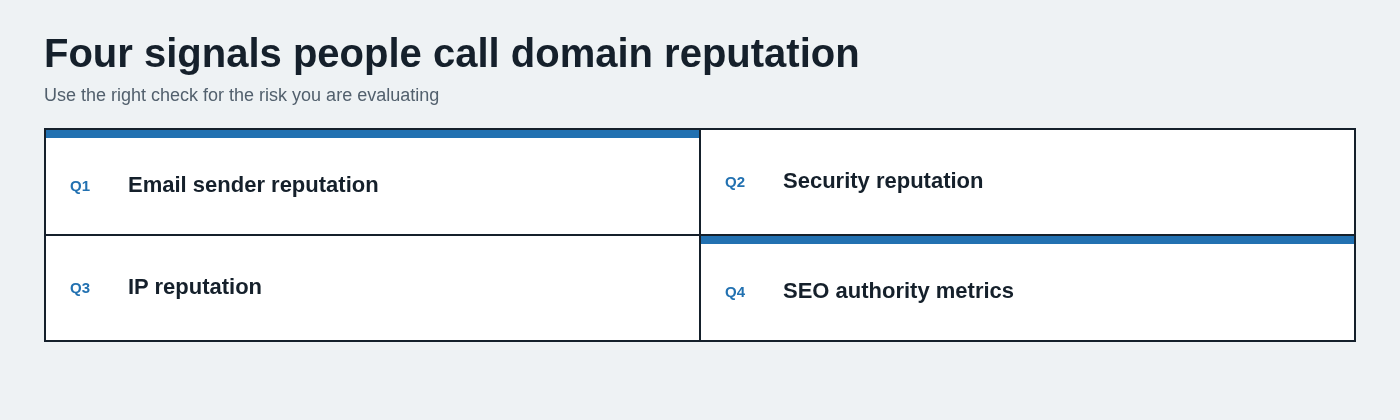
The confusion starts when several separate systems are grouped under the same label. Email providers assess whether messages from your domain deserve inbox placement. Security tools assess whether a site hosts malware, phishing pages, or deceptive redirects. IP-based systems assess the infrastructure sending traffic or email. SEO platforms estimate link authority using proprietary metrics.
These assessments overlap only occasionally. A domain might have a high backlink-based authority estimate while its emails land in spam. A newly launched domain may have little SEO authority but be entirely legitimate and secure. A site can also have strong content and rankings until a hacked page triggers a browser warning.
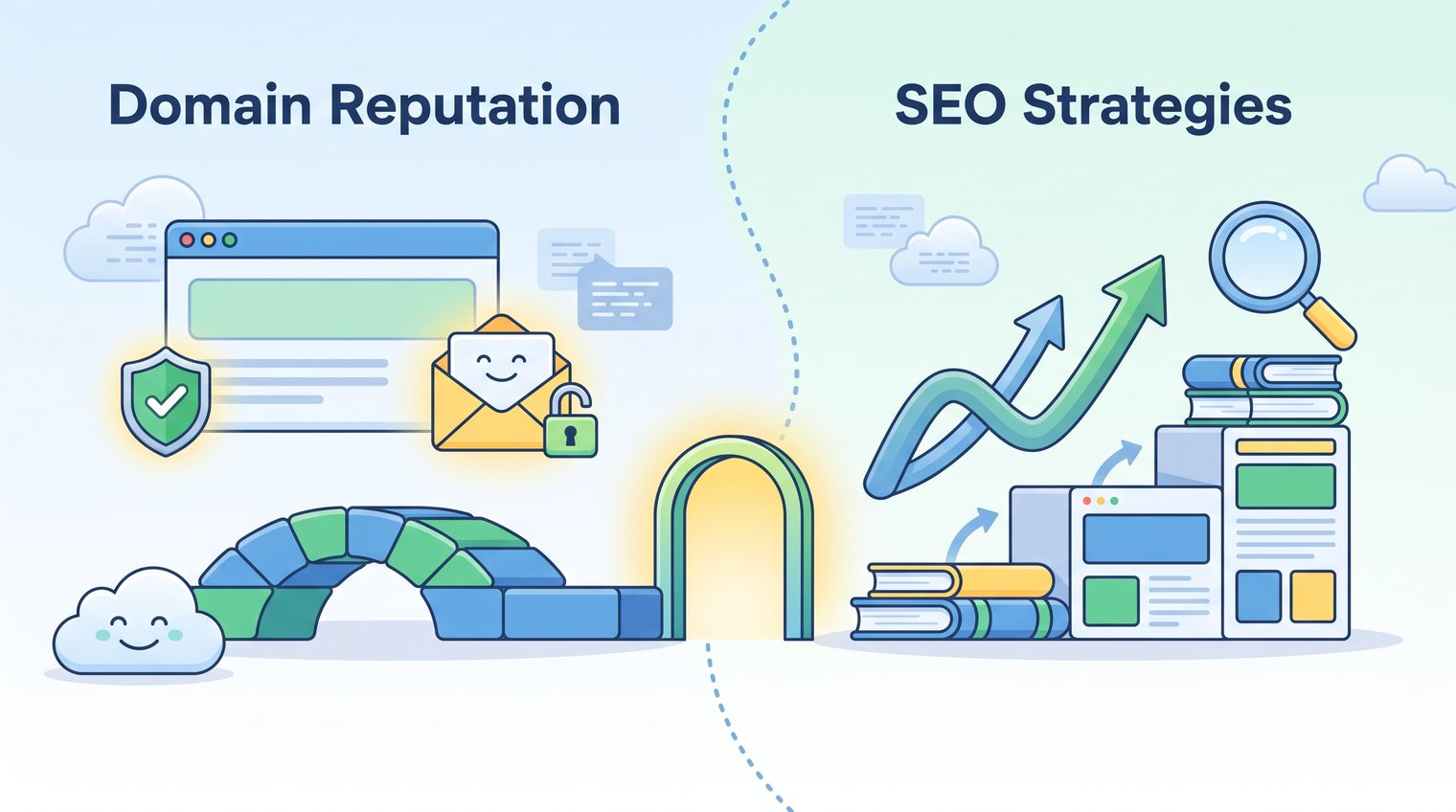
For organic growth, the important distinction is simple: reputation protects your ability to operate, communicate, and earn trust. SEO strategy creates the relevance, discoverability, and authority needed to win qualified search traffic.
Quick verdict: strengthen reputation foundations, but do not treat a score as an SEO growth strategy
A trusted, technically sound domain is essential. It supports crawlability, user confidence, email deliverability, outreach, partnership conversations, and conversion. But a clean reputation alone does not make a page useful for a search query or give it a reason to outrank stronger competitors.
Rankings still depend on helpful content, search-intent alignment, technical health, internal linking, topical relevance, and credible links from other sites. Reputation work removes damaging constraints; growth work builds demand capture and ranking potential.
How domain reputation affects organic growth - and where the effect is indirect
Some reputation problems have immediate business consequences. A browser warning can stop visitors before they ever see your content. A phishing classification can damage brand confidence, while malware or harmful-download flags may cause platforms, partners, and customers to avoid your site altogether.
Email reputation problems are equally disruptive for teams that rely on newsletters, sales outreach, customer notifications, or digital PR. If messages are filtered into spam, you lose the ability to reconnect with customers, promote new content, pitch journalists, and build relationships with publishers.
The SEO impact is often indirect rather than a confirmed public ranking signal. Fewer people click a flagged result. Fewer publishers respond to outreach from an untrusted domain. Referral traffic declines, reputation suffers, and internal teams spend their time on incident response instead of content and optimization.
When people search for "domain reputation Google," they are usually looking for a Google-owned score. Google does not publish one universal public domain reputation score for SEO. However, Google Safe Browsing can flag dangerous content, and Google Search Console can report security issues affecting a verified property. Both are important operational signals, but neither replaces a complete SEO assessment.
Domain reputation vs. Domain Authority, Domain Rating, and page authority
SEO metrics such as Moz Domain Authority, Ahrefs Domain Rating, and page-level authority estimates are useful comparative indicators. They typically model the strength and quantity of backlink signals pointing to a site or page. They can help prioritize outreach prospects, benchmark competitors, and observe broad changes in a backlink profile.
They are not Google ranking factors, and they are not complete measures of trust or safety. A domain authority checker cannot tell you whether your outbound email is being blocked, whether a shared IP has a poor sending history, or whether a security provider has flagged a compromised URL.
That matters when evaluating results from a Moz Domain Authority checker, an Ahrefs backlink checker, or any tool described as an "Ahrefs domain authority checker." These platforms are measuring different models with different databases. Use them as directional SEO evidence, not as a universal verdict on your business.
A high-authority domain can still have a poor email sender reputation because of aggressive campaigns, low engagement, or weak authentication. Conversely, a small new business may have a low authority score simply because it has not earned many links yet. That does not make the site spammy or malicious.
How to check the reputation of a domain: a layered audit
If you need to check the reputation of a domain, do not rely on a single free checker and move on. A meaningful audit reviews the systems that can actually affect your site, email program, and organic-growth efforts.
Start with the question behind the check. Are customers reporting browser warnings? Are emails failing to reach inboxes? Has organic traffic dropped? Are you vetting a potential partner before accepting a backlink or publishing sponsored content? The evidence you need changes with the risk.
- Security and browser status: Look for phishing, malware, harmful download, or deceptive-content warnings.
- Blacklist and abuse signals: Review relevant domain and IP listings, then verify the listing source and date.
- Email authentication and performance: Check SPF, DKIM, DMARC, complaint rates, bounces, and inbox placement.
- IP reputation: Determine whether your email or hosting IP is dedicated or shared, and whether it is associated with abusive activity.
- SEO quality: Review indexed pages, crawl behavior, backlink patterns, referring domains, and obvious spam pages.
- Brand signals: Search your name, domain, and key executives for scam reports, impersonation, warning pages, or customer complaints.
Free domain reputation checkers can be useful starting points, but their data sources and update schedules vary. One clean report does not prove universal trust, and one third-party flag does not automatically prove wrongdoing. Treat results as evidence to investigate, not a final judgment.
Check Google security status and search visibility
For Google-specific checks, use the Security Issues report in Google Search Console for your verified site. It can identify hacked content, deceptive pages, malware behavior, or harmful downloads that Google has detected. If an issue appears, investigate the affected URLs, server logs, user accounts, plugins, and recent deployment changes before requesting a review.
Google's Safe Browsing Transparency Report can also help identify security warnings associated with a site. This is one of the most practical ways to check domain reputation on Google, with an important caveat: it checks for known harmful or deceptive behavior, not a broad SEO reputation score.
Then review your search footprint manually. Search for your brand name and domain, inspect the type of pages indexed, and look for unexpected subdomains, foreign-language spam pages, irrelevant product pages, or suspicious title tags. Sudden changes in crawling, indexation, or branded-search results can indicate a technical issue or compromise worth escalating.
Check email domain and IP reputation separately
Email domain reputation is built through sending behavior. Check whether SPF, DKIM, and DMARC are correctly configured and aligned with the domain used in the visible From address. Authentication does not guarantee inbox placement, but missing or misaligned authentication makes legitimate mail harder for recipient systems to trust.
Review complaint rates, bounce rates, unsubscribes, engagement, sending-volume spikes, and recipient-list quality. A domain that suddenly sends thousands of emails to old or unengaged contacts is likely to create deliverability trouble even if the website itself is perfectly safe.
For an IP reputation check, identify the IP used by your sending platform or mail server and review available blocklist data and postmaster reporting. Recipient providers may offer their own dashboards where available, including Microsoft-related sender reporting for organizations trying to perform a Microsoft domain reputation check. The exact data available depends on the provider and whether you control the sending infrastructure.
A dirty IP address is an IP with a poor history, often because it has been associated with spam, bot activity, compromised systems, or abusive traffic. A malicious IP address is an IP associated with harmful activity such as malware distribution, phishing infrastructure, scanning, or attacks. Those labels need context: on shared infrastructure, another customer's behavior may affect the IP without indicating that your domain is malicious.
Do not try to bypass monitoring or obscure a legitimate investigation. If an IP is listed, determine why, fix the underlying sending or security issue, and use the appropriate provider or list-removal process. For a shared IP problem, your email platform or hosting provider may need to handle remediation.
Check whether a domain is spammy or malicious
To check if a domain is spam, review more than backlinks or a low-quality site design. Look at the indexed pages, redirect behavior, content purpose, contact details, ad density, repeated templates, outbound links, and whether pages exist mainly to manipulate search results. A sudden influx of thin pages, scraped content, or keyword-stuffed location pages is a stronger concern than a single awkward blog post.
A malicious domain is a domain associated with phishing, malware, deceptive downloads, credential theft, harmful redirects, or similar abusive behavior. Security scans and blacklist reports are useful, but inspect the actual URL behavior as well. Check DNS records, hosting changes, recent domain ownership changes, and whether the site redirects visitors differently based on device, location, or referrer.
Backlink patterns can add useful context. Large volumes of irrelevant, paid-looking, or automated links may indicate manipulative SEO or a compromised site, but low-quality backlinks alone do not prove that a domain is malicious. Before requesting delisting, reporting a partner, or removing content, document the evidence and separate facts from a third-party risk score.
A comparison matrix: reputation monitoring vs. organic-growth alternatives
Reputation monitoring and SEO initiatives should not compete for the same job. Monitoring protects the channel. Technical SEO removes site-level barriers. Content creates relevance. Earned links and editorial partnerships build authority and discovery.
| Approach | Primary job | Time to impact | Main success measure | Direct ranking impact? | Risk when neglected |
|---|---|---|---|---|---|
| Reputation monitoring | Detect security, sender, and trust failures | Immediate when an issue is found | Warnings resolved, delivery health, incident recurrence | No; mainly removes constraints | Browser warnings, spam filtering, brand damage |
| Technical SEO | Improve crawling, indexing, speed, and site usability | Days to months | Index coverage, Core Web Vitals, crawl efficiency | Yes, when technical barriers limit visibility | Strong content remains inaccessible or underperforming |
| Content strategy | Match search intent and build topical relevance | Weeks to months | Qualified traffic, rankings, engagement, conversions | Yes | Little reason for searchers to choose your pages |
| Digital PR and earned links | Earn credible mentions, links, and brand discovery | Months | Relevant coverage, referring domains, referral traffic | Often, through stronger authority and discovery | Authority growth stalls in competitive markets |
| White-hat link insertions and editorial partnerships | Place relevant contextual links through legitimate publisher relationships | Weeks to months | Relevant placements, referral value, referring-domain quality | Can support rankings when editorially relevant | Fewer pathways to build authority and awareness |
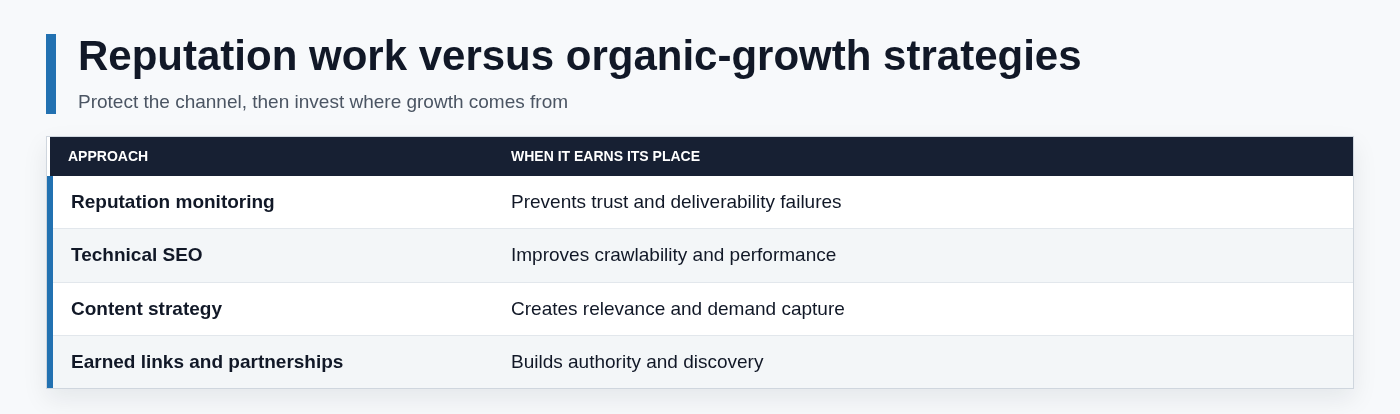
The table is not a ranking of importance. It is a sequencing guide. A compromised domain needs remediation before a content push. A clean site with poor rankings usually needs better technical execution, stronger content, or more credible authority signals - not another generic reputation check.
When reputation work should come before SEO growth investments
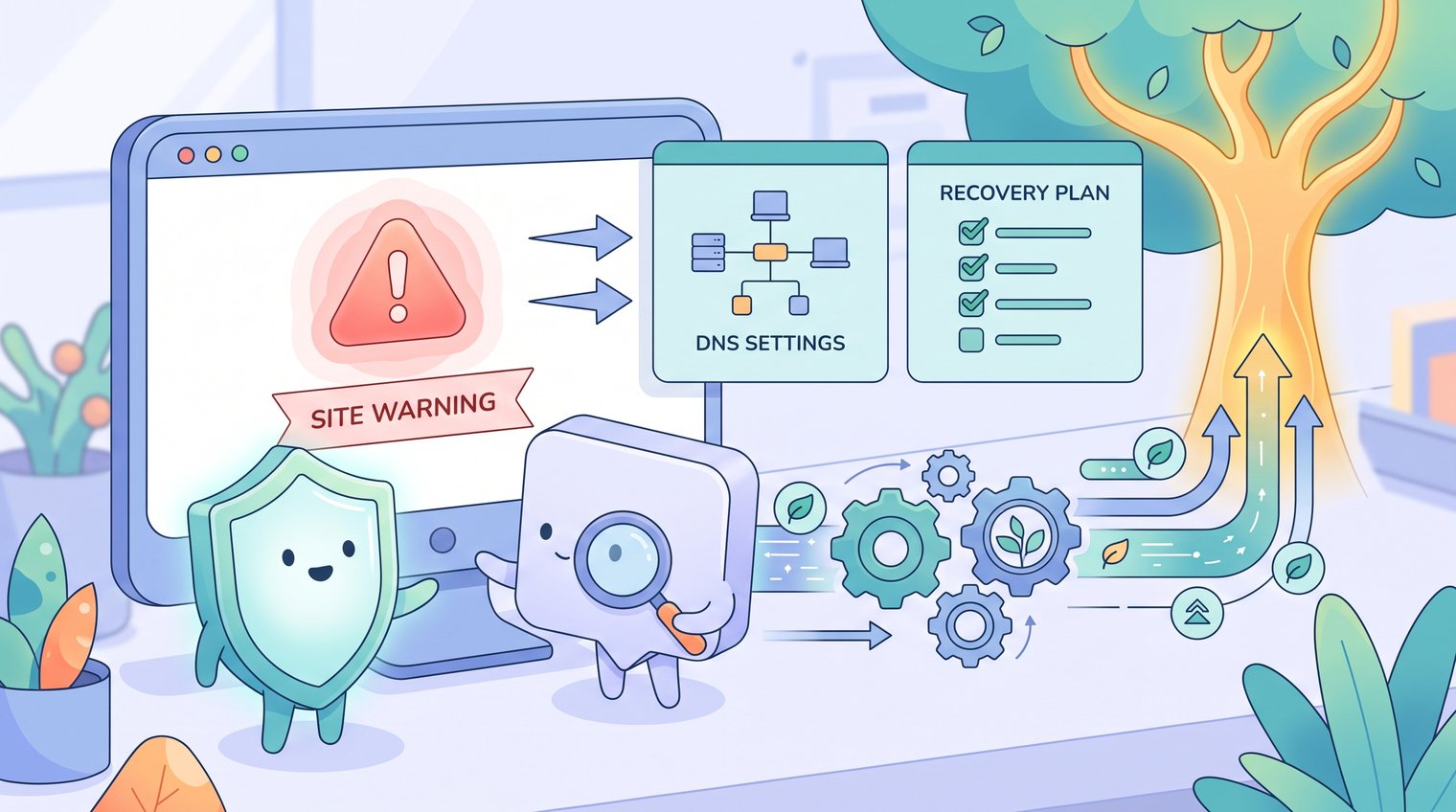
Put growth campaigns on hold when there is evidence of an active trust or security problem. This includes malware or phishing warnings, hacked pages, spam URLs appearing in the index, suspicious redirects, blacklist listings tied to real abuse, sharp deliverability declines, or unexplained changes to links and site files.
The immediate goal is containment, not ranking gains. Take the affected site or campaign seriously, especially if credentials, customer data, or payment flows could be involved.
- Verify site ownership, access logs, CMS users, DNS settings, hosting accounts, and recent changes.
- Remove malicious files, injected pages, unauthorized redirects, and compromised accounts.
- Patch the CMS, themes, plugins, server software, and integrations that created the exposure.
- Reset credentials, enable multi-factor authentication, and review permission levels.
- Request a security review or delisting only after the underlying issue is resolved.
- Monitor logs, indexation, authentication records, and sending behavior for recurrence.
Questions about IP safety often get mixed into this process. Someone can use or observe an IP address without you knowing in ordinary ways; websites and network services need an IP to communicate. That is not the same as a compromise. An IP address alone does not normally let an attacker hack a phone. Actual compromise generally requires an additional weakness, malicious app, exposed service, stolen credentials, or social engineering.
If you believe a device, account, or network has been compromised, contact your IT or security team, mobile carrier, hosting provider, or managed security provider. Avoid relying on consumer IP lookup results as proof of surveillance or intrusion.
When content, technical SEO, and quality backlinks are the better growth lever
If the site is secure, emails authenticate correctly, and there are no meaningful warning or blacklist issues, reputation cleanup is unlikely to be the main reason growth has stalled. The more likely causes are thin content, poor intent matching, weak internal linking, slow templates, inaccessible pages, or an authority gap against established competitors.
Start by examining the pages that should be winning. Do they answer the query better than the current top results? Are they clear about the product, service, or problem? Do they include useful evidence, examples, pricing context where appropriate, and logical paths to related pages? Great outreach cannot rescue a page that gives searchers little reason to stay.
Technical SEO comes next when pages are difficult to crawl, duplicate versions compete, performance is poor, or key content depends on scripts that search engines and users struggle to access. These issues can suppress otherwise valuable content.
Quality backlinks become especially important when your content is strong but competitors have more relevant editorial mentions and referring domains. Editorial guest posts, contextual link insertions, and content partnerships can support authority and referral discovery when placements are relevant, transparent, and genuinely useful to the host audience. They should not be treated as a volume game or a workaround for poor content.
For businesses that have resolved trust issues and need ongoing authority support, LinkHandy offers white-hat contextual link-building, editorial guest posts, and content partnerships. The trade-off is that legitimate placements take editorial fit, review, and relationship work; they are not the instant, scaled links promised by manipulative link schemes. That is precisely what makes the approach more appropriate for durable organic growth.
How to choose the next action based on your evidence
Use the evidence in front of you rather than chasing the broadest possible domain reputation score. There is no universal "good" score because every system uses its own data, thresholds, and risk model.
- Pick security and reputation remediation if: visitors see warnings, Google reports security issues, your site has been hacked, suspicious redirects appear, or credible blacklist evidence points to active abuse.
- Pick deliverability work if: legitimate messages are going to spam, complaint or bounce rates are rising, authentication is missing, or a sending IP has a documented reputation problem.
- Pick technical SEO if: important pages are not being crawled or indexed properly, site performance is weak, duplicate URLs compete, or templates create usability barriers.
- Pick content strategy if: you lack pages that directly answer valuable queries, rankings are weak because intent is mismatched, or your site has shallow topical coverage.
- Pick quality link acquisition if: your content is competitive but your brand lacks relevant referring domains, credible mentions, and discovery opportunities compared with competitors.
Domain availability and extensions matter most when selecting a new domain or planning a migration. A newer extension does not automatically create poor reputation. However, a migration needs careful redirects, email authentication, brand communication, analytics continuity, and monitoring so that users and platforms continue to recognize the business.
The right threshold is the one used by the system evaluating you. For email, focus on authentication, complaint patterns, and inbox placement. For security, focus on active warnings and verified remediation. For SEO, focus on qualified organic traffic, rankings for relevant queries, conversions, indexation, and the quality of referring domains.
Build a durable trust baseline, then pursue sustainable organic growth
Monitor security status, email authentication, IP health, and branded search results continuously. These checks protect the foundation of your digital presence and help you catch serious problems before they damage customers, partnerships, or visibility.
Then measure SEO progress where it counts: qualified traffic, rankings, conversions, useful content performance, and relevant referring domains. A clean domain is the starting line, not the finish line.
Once your domain is technically secure and trustworthy, consider LinkHandy for white-hat content partnerships and contextual backlink opportunities that fit into a broader, sustainable organic-growth plan.