
Buying backlinks by the month is easy. Choosing a partner who can strengthen the right pages, protect your brand, and give your team visibility into how placements are earned is much harder.
That distinction matters for SaaS and B2B companies. A poorly sourced link can be irrelevant at best and a lasting liability at worst. A capable link building consultant does more than deliver URLs: they turn commercial priorities, content assets, and competitive gaps into an authority-building program you can inspect before it scales.
What a B2B Link Building Consultant Does - and When You Need One
A B2B link building consultant helps a company earn or secure relevant editorial links that support its organic growth strategy. The work usually spans diagnosis, target-page prioritization, prospect research, outreach, placement review, and reporting. In a strong engagement, the consultant also helps determine whether the pages receiving links are genuinely ready to convert the authority they gain into better search performance.
That is different from a link vendor that sells a menu of placements. A vendor may be useful when you already have a tightly defined process and only need inventory. But a consultant should bring judgment: which topics matter, which publications make sense, where editorial context is credible, and where a link would be a waste of budget.
SaaS and B2B teams often benefit from outside expertise when organic growth has stalled despite solid on-page work, when the internal team has no capacity for consistent outreach, or when a new content-led SEO program needs authority behind it. It can also be the right move when an existing backlink profile is weak, overly concentrated, or full of links that do not support current commercial priorities. A link audit SEO process can help establish which problems require strategic correction before new outreach begins.
The quick decision: consultant, agency, freelancer, or in-house hire?
These models solve different problems, even though the labels are often used loosely.
- Consultant: Best when you need strategic direction, a diagnostic view of your backlink profile, or help designing standards and a repeatable process. Execution capacity varies by consultant.
- Agency: Best when you need both strategy and ongoing delivery from a team with prospecting, outreach, editorial, and account-management capacity.
- Freelancer: Best for narrowly defined projects or additional specialist capacity when an internal lead can provide direction and quality control.
- In-house hire: Best when link acquisition is a long-term core function and you have enough ongoing demand to justify a permanent owner, tooling, and editorial support.
The practical question is not which label sounds best. It is whether you need a plan, repeatable execution, specialist capacity, or a permanent internal function. A lean SEO team may need an agency that can execute under clear approvals, while a mature team may only need a consultant to improve its operating model. Teams comparing ongoing execution with advisory support may also benefit from reviewing this guide to a managed link building service.
Start With the Business Outcome, Not a Monthly Link Quota
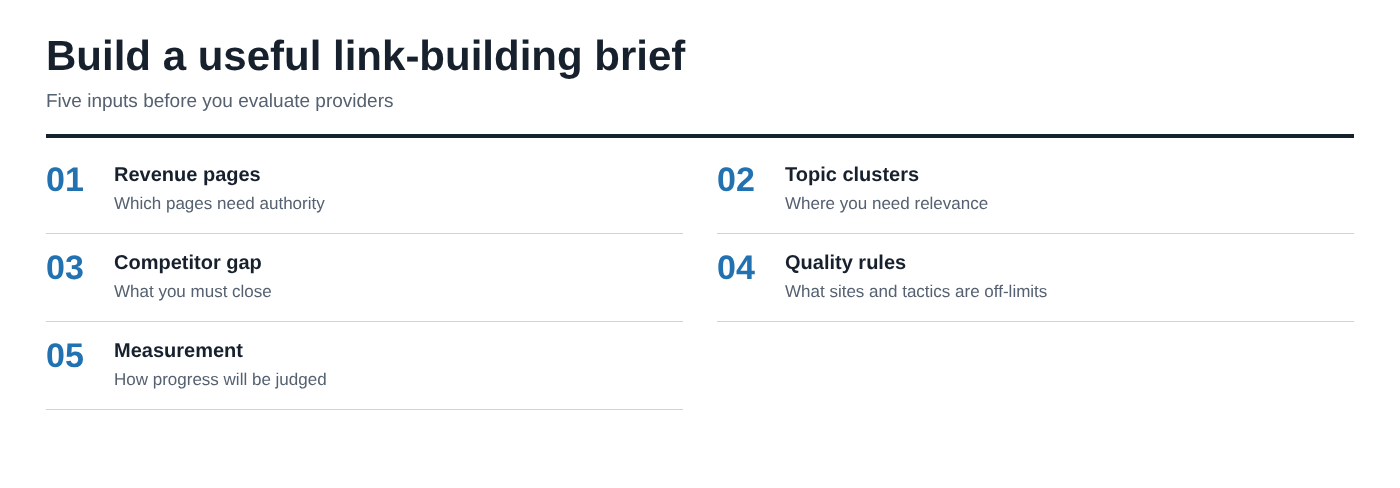
A monthly quota is a procurement convenience, not a strategy. If the only brief is "we need 10 links per month," a provider is forced to optimize for volume before relevance, destination quality, or commercial impact.
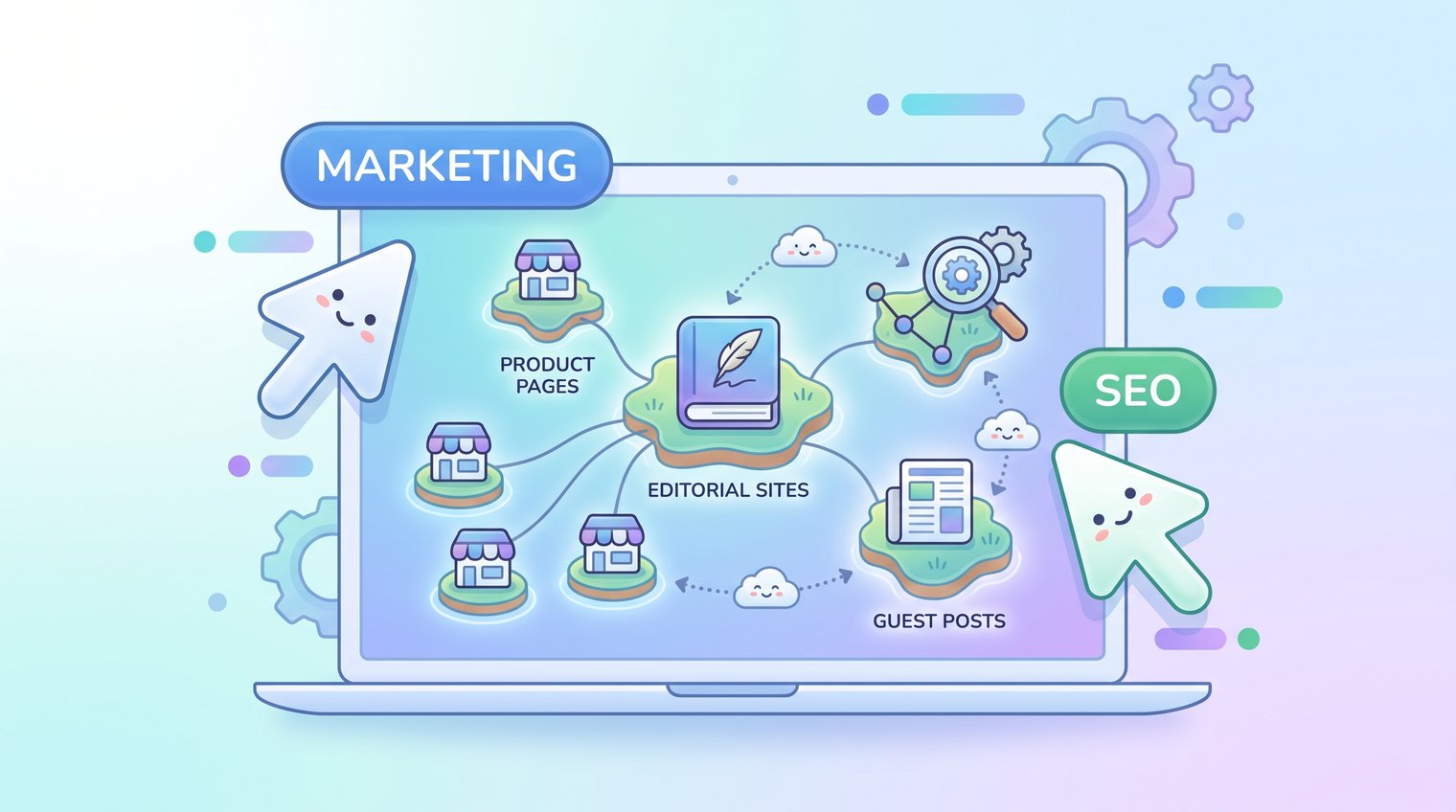
Start with the pages that matter to the business. For a B2B SaaS company, that might include a category page, a comparison page, an integration page, a product-led use-case page, or a high-intent guide that supports a sales conversation. Then connect those pages to topic clusters, competitors, target markets, and a realistic time horizon.
For example, imagine a project-management SaaS company wants to compete for "enterprise project management software." Its category page may need authority, but links directly to that commercial page will not always be the most natural editorial fit. A thoughtful plan could support the page indirectly through useful resources on project governance, portfolio planning, implementation risk, or team reporting - while also pursuing relevant opportunities for the category page itself.
Do not judge professional link building services only by links per month, Domain Authority, Domain Rating, or cost per placement. Those signals can be useful inputs, but none answers the main question: does this placement build credible relevance and authority around a page that supports a meaningful business goal?
Set objectives that a consultant can actually influence
Good objectives are specific enough to guide decisions but realistic about what link building controls. A consultant can influence the quality and relevance of referring domains, the editorial context of placements, the distribution of links across your site, and the consistency of outreach. They cannot fully control rankings, crawl behavior, algorithm updates, competitor activity, or whether a destination page satisfies search intent.
Useful objectives include:
- Support priority non-branded keyword groups tied to product or solution pages.
- Close a measurable backlink gap against direct organic competitors.
- Build topical authority around a strategic category, feature, or market segment.
- Improve the relevance of referral traffic and brand exposure in industry publications.
- Strengthen new content clusters that have strong on-page foundations but insufficient external authority.
A reputable consultant should explain the pathway from placement activity to likely SEO value without guaranteeing rankings or traffic. Guarantees sound reassuring, but they often hide a sourcing model built to fulfill a promise rather than protect your site.
Define your non-negotiables before outreach begins
A good provider cannot enforce standards your team has not defined. Before outreach starts, document prohibited tactics, target geographies, acceptable industries, editorial quality expectations, and brand-safety exclusions.
Also establish anchor-text governance. You do not need to prescribe an exact anchor for every link, and doing so can create unnatural patterns. You do need agreement on when branded, URL, partial-match, topical, and generic anchors are appropriate. Be explicit about disclosures, paid-placement policies, and whether your team needs to approve prospects before publication.
How to Assess a Consultant's Link Building Strategy
A credible strategy is not a spreadsheet of high-metric websites. It should explain the opportunity, the order of operations, and the reasoning behind each type of placement. For a practical framework, see how to build an SEO outreach strategy for B2B link building.
At minimum, expect an opportunity diagnosis, target-page priorities, content or asset requirements, prospecting logic, an outreach approach, and a sequencing plan. The strategy should reflect your site's current authority, the depth of its content, and the difficulty of the competitive landscape. Authority link building services are not one-size-fits-all because two sites with the same DR can have very different content quality, market positioning, and ability to earn editorial coverage.
Look for a page-and-topic-level plan
A capable consultant should be able to identify the URLs they would support, explain why they matter, and describe the kinds of editorial contexts that fit them. This prevents a common mistake: accumulating links to whichever URL is easiest to place rather than the pages that need support.
They should also flag weak destination pages. Links cannot rescue poor product positioning, thin content, unclear messaging, or a page that fails to answer the searcher's question. If a comparison page has no real comparison, or a feature page makes vague claims without proof, improve it before directing meaningful outreach effort toward it.
Ask for an explanation of the expected link path. Will links point directly to commercial pages, to supporting educational assets, or to both? As covered in the section on business outcomes, the answer should follow relevance and the page's role in the broader topic cluster, not a simplistic rule that every link must land on a money page.
Ask how relevance is judged beyond a metric
Third-party authority scores are estimates. They are useful for quickly sorting a large prospect list, but they should never be the final decision criterion.
Relevance includes topical proximity, audience overlap, the purpose of the referring publication, the editorial context surrounding the link, and whether the site attracts real organic visibility. Review the site's outbound-link behavior as well. A legitimate industry publication may link to commercial companies occasionally; a site that publishes an endless stream of unrelated sponsored-looking content and links out heavily is a different proposition.
A link from a modest but respected operations publication can be more valuable to an enterprise software company than a link from a large general-interest site with no meaningful audience overlap. The goal is not simply to borrow a metric. It is to earn a credible association in the places your buyers, partners, and search engines would reasonably expect to find you.
The Quality Standards That Separate Editorial Links From Risky Placements
"White hat" and "premium sites" are marketing terms unless a provider can explain the operating standards behind them. The useful test is whether placements reflect real editorial judgment, fit naturally within useful content, and create a sustainable pattern over time.
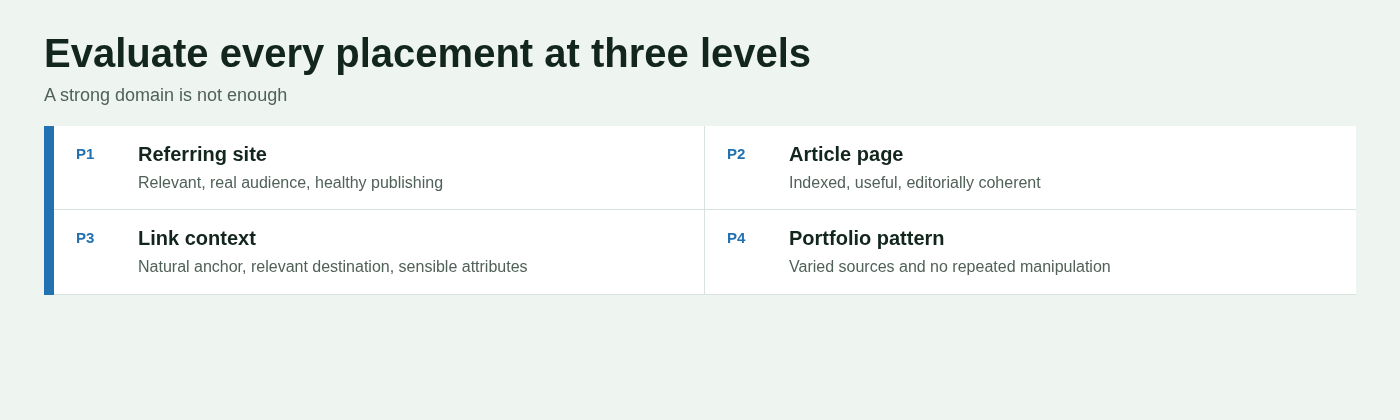
High-quality link building usually involves contextual links in indexed pages, natural language, relevant destination pages, and editorial discretion. It also produces a portfolio with variation: different publications, formats, topics, and reasonable anchor language rather than a repeated formula designed to manipulate one keyword.
Inspect the referring site, the page, and the link itself
Reviewing a placement at only the domain level is incomplete. Use three layers of due diligence.
- Referring site: Is the publication relevant to your market? Does it publish useful content for a recognizable audience? Is its editorial output coherent and actively maintained?
- Article or page: Is the page indexed, substantive, and contextually consistent with the site? Does it read like an editorial article rather than a vehicle for outbound links?
- Link itself: Does the anchor text read naturally? Does the surrounding paragraph support the destination? Is the target page genuinely useful to the reader?
Watch for irrelevant sponsored-looking posts, sitewide footer or sidebar links, thin pages, excessive commercial anchors, and pages with an unusually dense cluster of outbound links. None of these signals alone proves a placement is harmful, but a recurring pattern should be enough to reject a source.
Understand the role of link attributes and disclosures
Link attributes communicate something about the relationship behind a link. A standard follow link does not carry a rel attribute. A nofollow link indicates that the publisher is not necessarily endorsing or passing ranking signals in the same way. Sponsored identifies paid or compensated links, while UGC is commonly used for user-generated content such as forum posts or comments.
Not every valuable mention will be a follow link. A relevant nofollow editorial mention can still send qualified visitors, build awareness, and strengthen credibility with the right audience. An ethical provider should be transparent about expected attributes and disclosure practices, not promise that every placement will be dofollow regardless of a publisher's policies.
Disclosure requirements differ by jurisdiction and publication policy. Concealing compensation or manipulating editors is not evidence of quality. Clear communication and editorial integrity are.
What to Ask Before You Hire a Link Building Agency or Consultant
The best hiring questions force a provider to describe how work actually happens. Broad claims about publisher relationships or white-hat methods are not enough. Ask for direct answers, examples where possible, and clear boundaries where client confidentiality prevents disclosure.
Questions about sourcing and outreach
- How do you find and qualify prospects for this campaign?
- Do you contact publishers directly, use existing relationships, work through partners, or use a mix?
- Which placements are earned, paid, sponsored, or facilitated through third parties?
- Do you operate owned sites or networks? Do you resell inventory?
- Who makes the final decision to accept a prospect and publish a link?
- How do you prevent the same weak sources from appearing across unrelated client campaigns?
There is no single acceptable sourcing method. What matters is transparency about it. A provider that will not explain whether it relies on owned networks, brokers, or direct publisher outreach is asking you to accept risk you cannot evaluate.
Questions about approvals, reporting, and remediation
Ask what you see before a placement goes live. Some teams want to approve every prospect, while others prefer to approve only exceptions once standards are established. Either model can work if the approval rules are written down.
Request a sample report. It should make it possible to review the live URL, target URL, anchor text, publication date, link attribute where relevant, placement type, and any agreed quality notes. Ask how rejected sites are handled, what happens if an article changes materially, and whether a removed placement will be replaced under defined conditions.
Finally, clarify communication cadence and escalation paths. A monthly report is not a substitute for a process that lets stakeholders flag brand or compliance concerns before publication.
Questions about capacity and conflicts
B2B niches are often small. The same group of publications may be relevant to multiple vendors, cybersecurity, HR technology, or finance software companies. Ask how many clients the provider serves in your niche, how duplicate prospects are managed, and whether direct competitors can receive placements from the same publishers.
No agency can honestly promise unlimited unique opportunities forever. A candid partner will describe its exclusivity limits, rotation practices, and conflict policy rather than implying that every relevant publisher is permanently reserved for one client.
How to Verify Case Studies, Samples, and Link Building Services Reviews
Proof should help you assess repeatability, not just credibility by association. A logo wall or one impressive publication can show that a provider has done work before, but it does not tell you how consistently it sources placements or manages quality.
Look for credible third-party reviews, references where appropriate, anonymized examples, sample reports, and a methodology that holds together under scrutiny. Confidentiality is legitimate in B2B SEO, especially around client strategies and commercial terms. It should not become a blanket excuse for providing no evidence at all.
Audit a sample placement like a prospect would
Open the live URL. Read the page, not just the domain metric. Is the article genuinely useful? Does the topic fit the publication? Would a reader understand why the cited company or resource appears there?
Then inspect the immediate context. Review nearby outbound links, the tone of the anchor text, and the match between the referring article and the destination page. A productivity article linking to a detailed resource on workflow planning may make sense; the same article linking to an unrelated payroll platform through an exact-match commercial anchor deserves scrutiny.
Review several samples across different publications and dates. One strong placement proves almost nothing about the typical delivery pattern. A set of samples lets you see whether quality remains consistent, whether the same domains recur, and whether the provider's stated standards are visible in the work.
Treat performance claims as hypotheses to validate
When a provider cites ranking gains, organic traffic growth, or authority improvements, ask for the baseline, time period, pages involved, and the wider context. Was new content published? Was technical SEO fixed? Did search demand change? Did the client run paid campaigns or PR activity that could also influence results?
Effective link building services should discuss attribution honestly. Links can contribute materially to performance, but SEO outcomes rarely have a single cause. A provider that explains the limits of attribution is usually giving you a more useful basis for decision-making than one that claims all gains as its own.
Pricing Models, Scope, and Contract Terms to Compare
Pricing structures affect behavior. Compare the commercial model alongside quality standards, because incentives determine what a provider can reasonably prioritize.
A retainer usually supports ongoing strategy, prospecting, outreach, coordination, and reporting. Per-placement pricing can make costs easy to model but may push providers toward delivery volume unless quality controls are robust. A project-based engagement can work well for a backlink audit, authority roadmap, or launch campaign. Hybrid models combine strategic support with a defined delivery component.
What should be explicit in the scope of work
Do not accept a vague description such as "monthly link building." The scope should identify who owns strategy, prospecting, content creation or edits, outreach, approvals, publication coordination, reporting, and account management.
It should also answer practical questions:
- Are publication costs included, excluded, or approved separately?
- Who writes or edits contributed content?
- Can content be reused elsewhere after publication?
- What reporting fields will be supplied?
- What is the replacement policy if a link is removed or a page is changed?
- Are there minimum commitments, renewal rules, or exit terms?
- Can links be removed after the contract ends, and who controls that decision?
These details are not legal fine print. They determine how much visibility and durable value you receive.
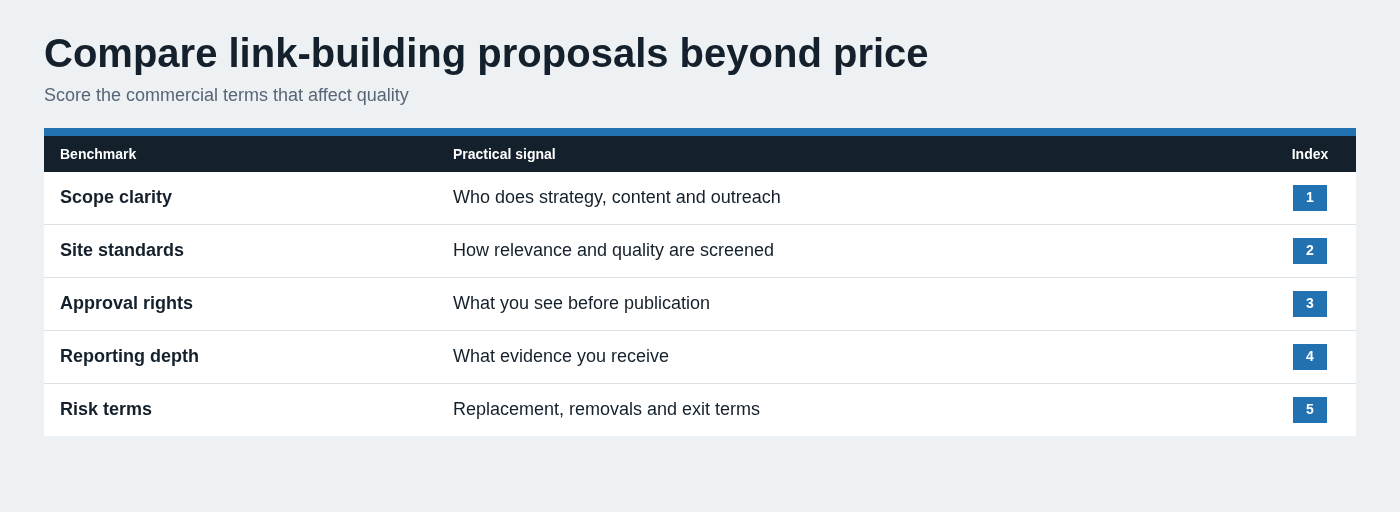
Compare proposals on effective value, not headline price
A cheaper link is not necessarily a cheaper program. If it comes from irrelevant sources, requires no strategic work, or leaves your team unable to review placements, the apparent savings can disappear quickly.
Compare relevance, editorial quality, target-page support, transparency, content work, reporting depth, approval rights, and replacement terms. A proposal should also show how standards will be applied in practice, not merely state that sites will have high authority.
Be cautious with rigid guarantees around authority metrics, turnaround times, or exact anchor text. Those commitments can create pressure to source whatever is immediately available rather than waiting for a suitable publication and editorial context.
Red Flags That Should End the Conversation
Not every weak proposal is malicious. Some providers simply operate a model that does not fit a B2B brand with long-term SEO goals. Still, several signals should disqualify a prospective partner quickly.
Promises that conflict with how editorial publishing works
Be skeptical of guaranteed rankings, guaranteed placements on named high-authority publications without documented access, instant delivery at meaningful scale, or claims that every link will be permanently safe. Editorial publishing involves publisher standards, changing pages, and variables outside any provider's control.
A credible partner can commit to process, quality checks, communication, and remediation terms. They should not claim control over search-engine outcomes or independent editorial decisions they do not actually own.
Opaque sourcing and suspiciously uniform delivery
Other warning signs include refusing to share methodology or samples, hiding live URLs in reports, requiring exact-match anchors at scale, pushing approval decisions without adequate information, and delivering irrelevant publications that happen to have attractive metrics.
Watch for recycled sites, private-network patterns, generic guest posts with little editorial value, or a portfolio where every link has the same format and commercial intent. A natural authority profile is varied because the web is varied.
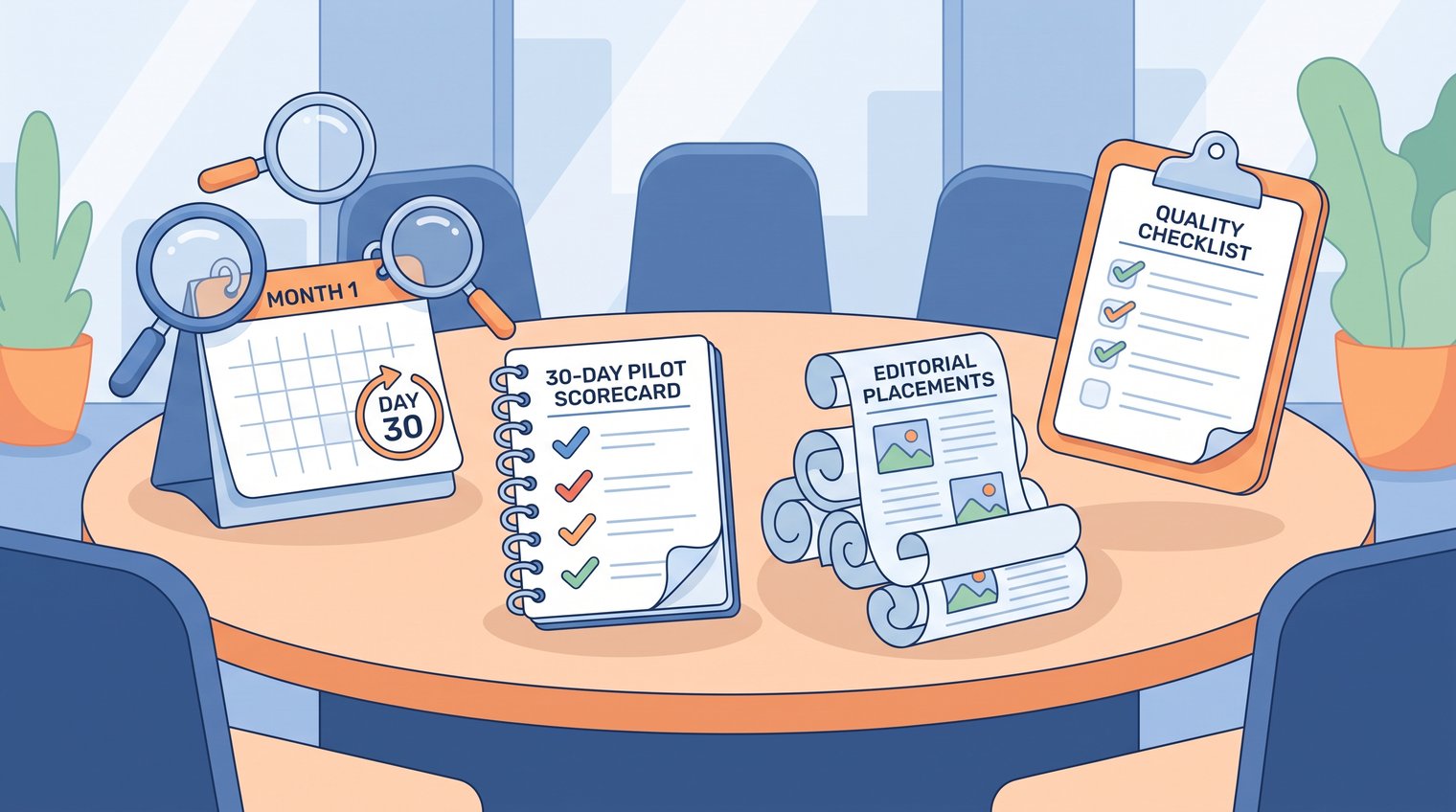
A 30-Day Pilot Framework for Outsourced Link Building Services
A pilot should test the provider's operating system before you commit to a long-term volume plan. Do not treat 30 days as enough time to demand major ranking movement. Treat it as enough time to determine whether the partner makes sound decisions, communicates clearly, and follows the standards you agreed on.
Week 1: Align on pages, standards, and approvals
Begin with a target-page list and a shared view of why each page matters. Set relevance criteria, excluded site categories, brand-safety requirements, anchor-text guardrails, reporting fields, escalation contacts, and approval rules.
Capture a baseline for current rankings, referring domains, existing links to priority pages, and content readiness. This baseline is not there to create a false promise of immediate attribution. It gives the team a disciplined starting point for future review.
Weeks 2-3: Review the opportunity pipeline before publication
Ask the consultant to present a live prospect set with the rationale for each opportunity. Do not wait until a final delivery report to see what has been sourced.
Review topical fit, audience overlap, duplication risk, expected placement format, destination-page fit, content quality, and whether any compensation or disclosure conditions apply. Pay close attention to what happens after feedback. A good partner should use your comments to improve the next batch rather than treat approvals as a one-time administrative hurdle.
Week 4: Score the partnership, not just the delivered links
Evaluate strategic judgment, transparency, responsiveness, quality consistency, adherence to approvals, reporting accuracy, and the usefulness of recommendations. The goal is to assess whether this is a partner your team can manage confidently at greater scale.
Document what you learned. You may decide to expand the program, revise page priorities and sourcing rules, or stop the engagement. A pilot succeeds when it produces enough evidence to make that decision rationally.
How to Manage the Relationship After You Hire
Outsourcing link building does not mean handing over strategy. The best client-provider relationships combine specialist execution with timely context from the company that knows its buyers, product, and market better than anyone else.
Set a recurring strategy review rather than reducing every conversation to placement counts. Discuss content releases, product launches, competitive changes, new keyword opportunities, pipeline priorities, and feedback from previous prospect batches. This keeps the program aligned with the business instead of becoming a routine production line.
Build a feedback loop between SEO, content, and sales
Your sales team hears objections and buyer language every day. Your customer-success team understands implementation challenges. Subject-matter experts can add practical depth that editors and readers recognize. Those insights can create stronger editorial angles than generic "thought leadership."
For instance, if prospects repeatedly ask how to migrate from a legacy system, that may justify a detailed migration checklist, implementation benchmark, or technical guide. Those assets can support outreach while also helping sales conversations and organic topic coverage.
Share high-converting pages and emerging customer themes with your consultant. In return, ask for feedback on which content formats and angles are attracting relevant opportunities. Link building works better when content planning and authority strategy inform each other.
Review portfolio health quarterly
Each quarter, review the relevance of new referring domains, page-level link distribution, anchor diversity, content formats, lost links, competitor movement, and progress against priority topic clusters. Revisit whether current effort still supports the pages that matter most.
Avoid managing the program through one third-party metric. Domain scores can move for reasons unrelated to your goals, and they do not show whether links support commercial pages, build topical credibility, or reach relevant audiences. Portfolio health is about patterns, not one number.
Choose a Partner You Can Evaluate Before You Scale
The right B2B link building consultant or agency gives you more than a promised number of placements. They provide a clear page-level strategy, evidence-backed quality controls, transparent terms, and an approval process that lets your team see how decisions are made before links go live.
Start with business outcomes, define your non-negotiables, inspect samples closely, and use a short pilot to test the relationship. That approach protects your budget while making it easier to identify a partner capable of building sustainable authority.
For SaaS and B2B teams that want a transparent, editorial-first approach, LinkHandy can help assess strategy, fit, and the right path for managed link acquisition. The objective is not to promise rankings. It is to build relevant authority through a process your team can review and trust.